The Perfect French Macarons
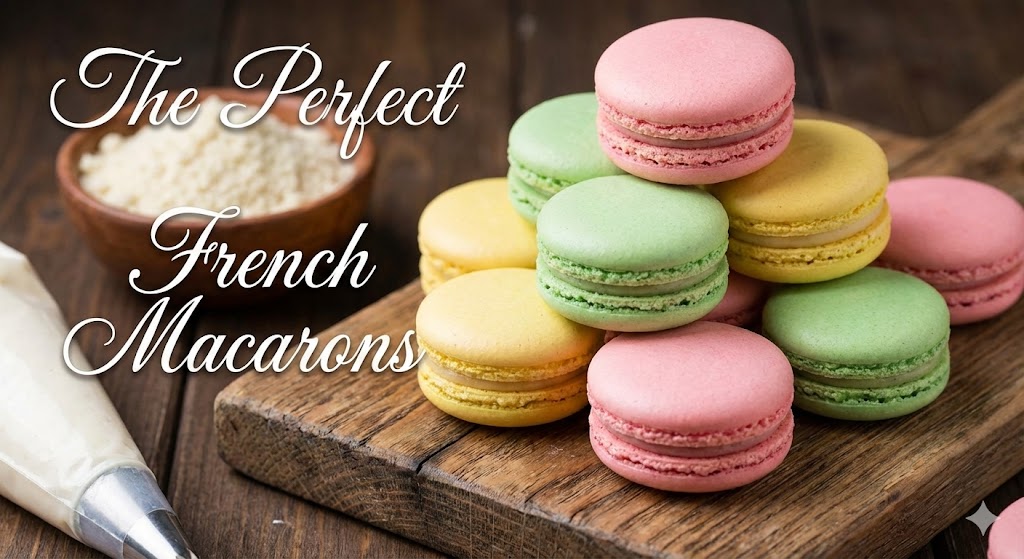
French macarons are notoriously finicky, elegant, and incredibly rewarding to master. These delicate almond meringue sandwich cookies have a reputation for causing even seasoned bakers to pull their hair out. They are prone to cracking, spreading, going hollow, or completely lacking their signature ruffled 'feet.' However, once you understand the science behind the ingredients and the precise physical techniques required, you can consistently produce bakery-quality macarons in your own kitchen.
The foundation of a French macaron is the meringue. There are three primary ways to make meringue: French, Italian, and Swiss. For beginners, the French method is often the most straightforward, involving whipping raw egg whites with granulated sugar until stiff, glossy peaks form. The key to success here is 'aging' your egg whites. By separating your eggs a day in advance and leaving the whites in a covered bowl in the fridge, some of the water evaporates, relaxing the proteins. This makes the whites much easier to whip into a stable meringue that won't collapse when you fold in the dry ingredients.
Your dry ingredients must be meticulously prepared. Sifting high-quality, finely ground almond flour and powdered sugar together multiple times ensures a perfectly smooth top to your macaron shells. Any large pieces of almond will cause a bumpy, unappealing surface. Once the dry ingredients meet the meringue, you enter the most critical phase: the macaronage. This is the process of folding the batter to deflate some of the air from the meringue. If you under-mix, the batter will be too thick, leaving peaks on your piped cookies. If you over-mix, the batter becomes too runny, spreading flat and losing its feet. The perfect consistency is reached when the batter flows off your spatula like a thick ribbon and you can draw a figure-eight in the batter without it breaking.
After piping the macarons onto a silicone mat or parchment paper, you must rap the baking sheet firmly against the counter to expel trapped air bubbles. Then comes the final, crucial step before baking: resting. You must let the piped shells sit at room temperature for 30 to 60 minutes. During this time, the surface dries out, forming a matte skin. When baked, this skin prevents steam from escaping through the top, forcing the shell to lift upward instead, which creates the beautiful ruffled feet at the base. Fill them with a rich chocolate ganache or buttercream, and mature them in the fridge for 24 hours before eating for the perfect chewy texture.
📖 The Recipe
🍅 Ingredients
- 100g Egg Whites (aged 24 hours)
- 130g Almond Flour (super fine)
- 130g Powdered Sugar
- 90g Granulated Sugar
- 1/2 tsp Vanilla Extract
- Pinch of Cream of Tartar
- Gel Food Coloring (optional)
- 150g Dark Chocolate (for ganache filling)
- 150g Heavy Cream (for ganache filling)
🍳 Instructions
- Prep Dry Ingredients: Weigh your almond flour and powdered sugar precisely. Sift them together through a fine-mesh sieve at least twice. Discard any large almond pieces left in the sieve. This guarantees smooth shells.
- Whip the Meringue: In a spotless, grease-free glass or metal bowl, beat the aged egg whites on medium speed until foamy. Add a pinch of cream of tartar. Slowly add the granulated sugar one tablespoon at a time. Continue whipping until stiff, glossy peaks form. The meringue should stand straight up on the whisk without drooping. Add vanilla and a drop of gel coloring if desired.
- The Macaronage: Gently fold the sifted dry ingredients into the meringue in three additions. Use a silicone spatula to scrape around the bowl and press the batter against the sides to deflate the air. Continue folding until the batter is glossy and flows like lava. Test the consistency: you should be able to draw an unbroken figure-eight with the batter flowing off the spatula.
- Pipe the Shells: Transfer the batter to a piping bag fitted with a round half-inch tip. Pipe 1.5-inch circles onto baking sheets lined with parchment paper or a silicone mat, holding the bag straight up and down.
- Rap and Rest: Firmly tap the baking sheet against the kitchen counter 5-6 times to release trapped air bubbles. Pop any stubborn bubbles with a toothpick. Let the trays sit at room temperature for 30 to 60 minutes until a dry skin forms on top. You should be able to lightly touch the surface without batter sticking to your finger.
- Bake: Preheat your oven to 300°F (150°C). Bake one tray at a time on the middle rack for 13-15 minutes. The macarons are done when you can gently nudge a shell and it doesn't wobble on its feet. Let them cool completely on the tray before attempting to remove them.
- Fill and Mature: Make a simple ganache by pouring hot heavy cream over chopped dark chocolate, whisking until smooth, and cooling until pipable. Match similar-sized shells, pipe filling onto one, and sandwich them together. Place in an airtight container in the fridge for 24-48 hours. This 'maturation' process is vital for achieving the signature chewy interior.
You might also like
💬 Comments
Be the first to leave a comment!